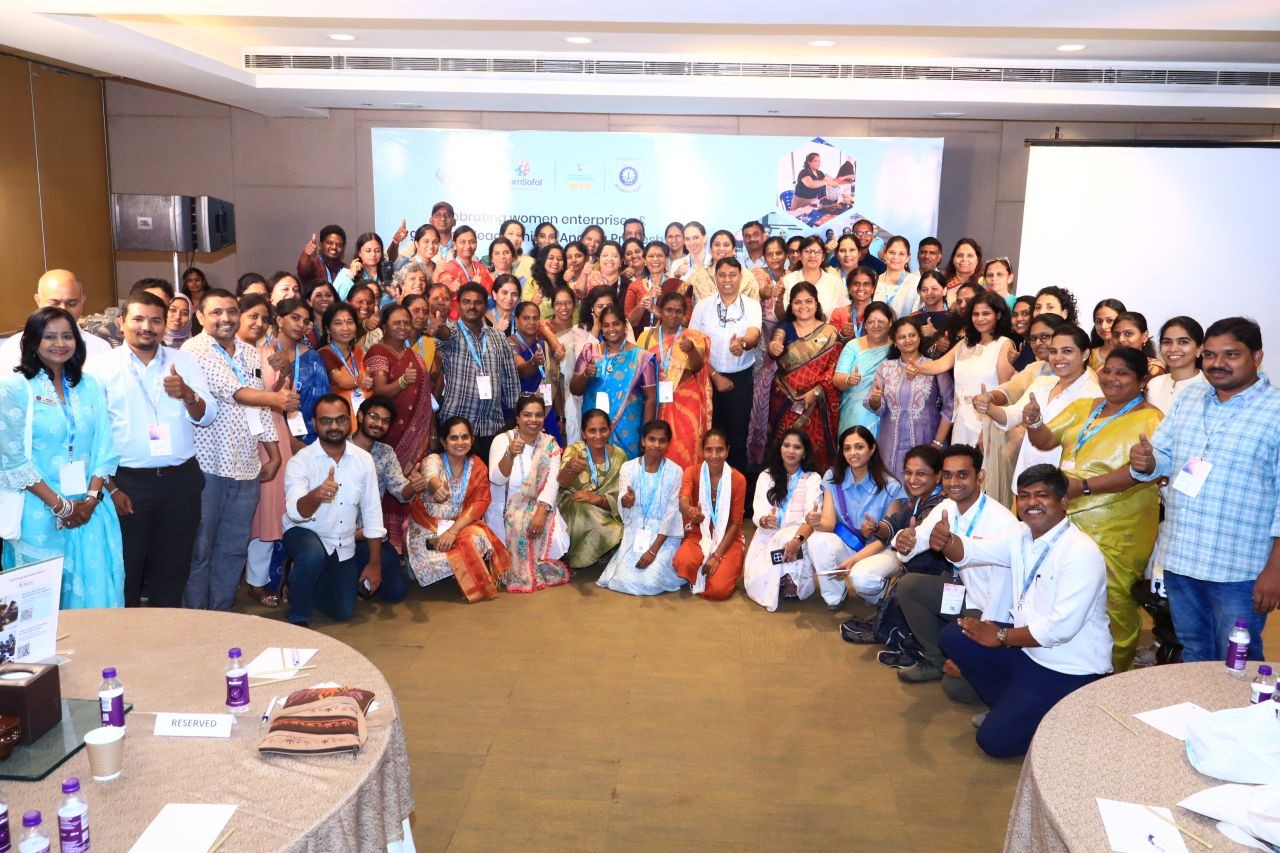
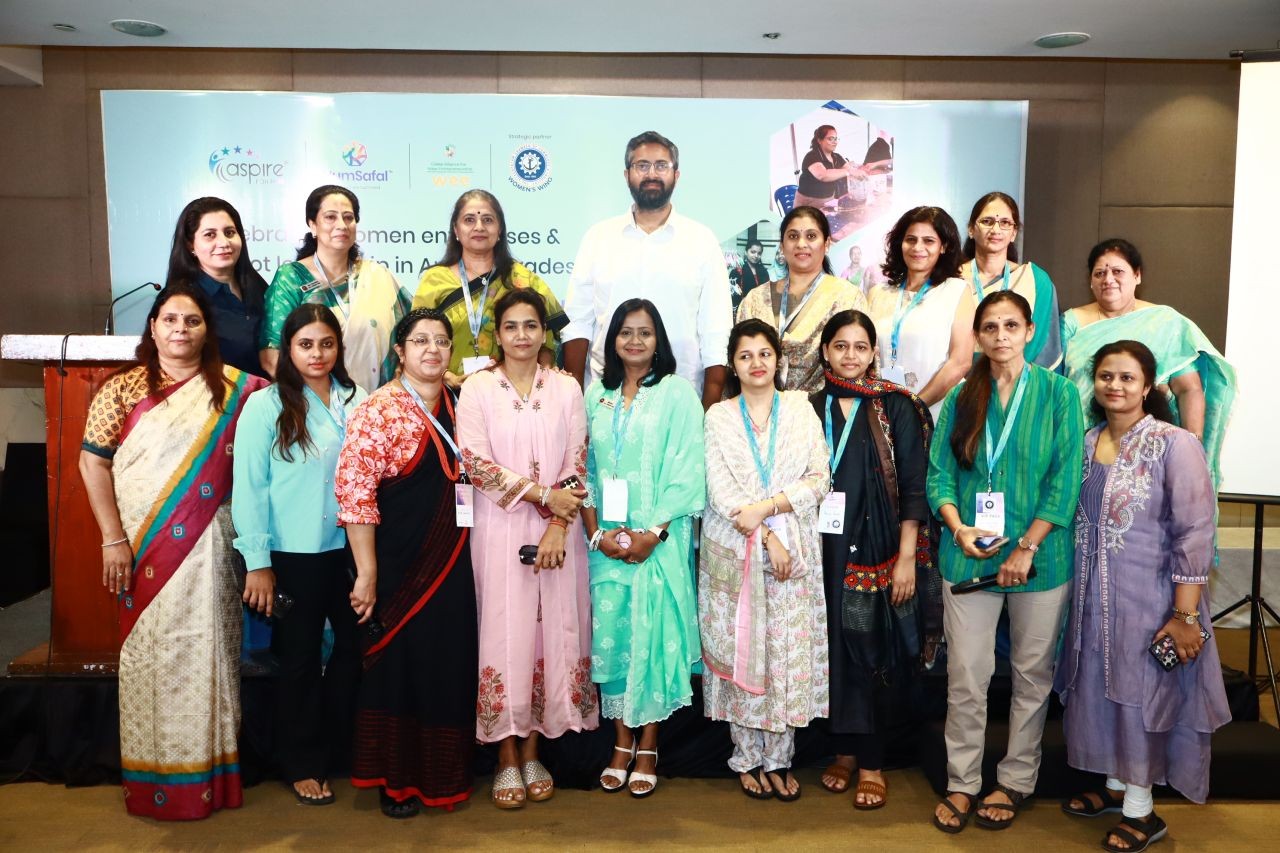
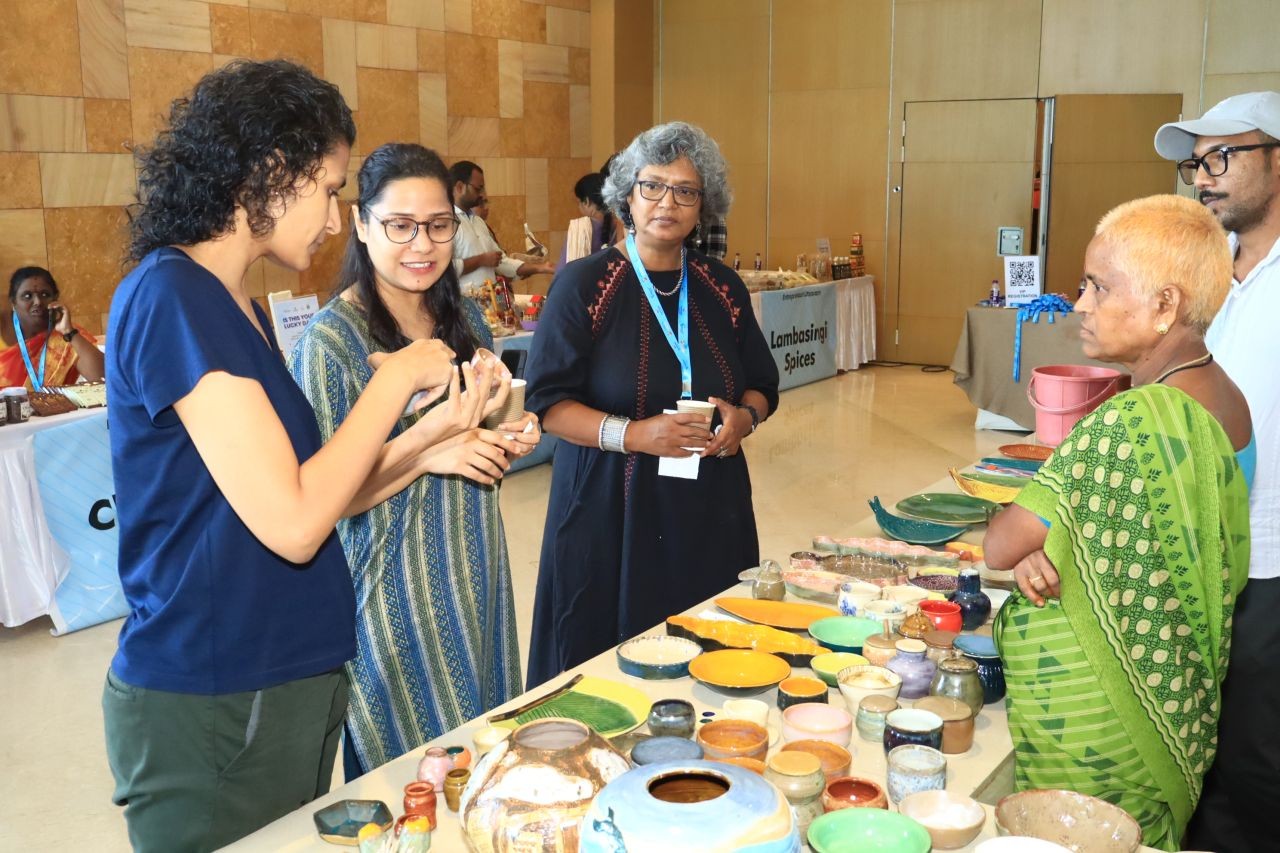
At a recent celebration of women entrepreneurs in Visakhapatnam—the EntrepreNaari Utsavam—the stalls outside the conference hall told a story that the panels inside simply couldn’t.
Ceramics, millet cookies, artisanal chocolates, intricate handicrafts, and rich local pickles lined the tables. These weren’t just products; they were testaments to talent. Many were crafted using materials straight from the entrepreneurs’ own backyards, sold with immense pride and undeniable quality.
But if you stopped to talk to the women behind the tables, a familiar, frustrating pattern emerged.
One entrepreneur confidently broke down where every single ingredient in her product came from and why her customers kept returning. But then, the conversation shifted. “How do I reach buyers in Hyderabad or Mumbai? How do I navigate GST compliance, professional packaging, pricing strategies, and logistics?”
She was trying to build a business in a system that expected her to already know the rules. Like thousands of women across India, she was stuck somewhere between the dream and the market.
Equipping individual women with skills is necessary, but it is no longer sufficient. To scale, we have to bridge that gap. The solution isn’t just mentorship—it’s collectivization.
The Power of the Crowd: Moving from “Cottage” to “Competitor”
When the Global Alliance for Mass Entrepreneurship (GAME) piloted its Women Economic Empowerment (WEE) initiative, it tested four pathways into the modern platform economy: rural e-commerce, gig work, social commerce, and job tech.
The data revealed a brutal truth: when women faced high platform entry costs, rigid payment terms, or institutional inflexibility, individual talent wasn’t enough to guarantee sustained income.
What actually worked? Aggregation.
By channeling individual producers into Aggregated Enterprises (AEs)—where they could pool resources, centralize GST compliance, share training costs, and negotiate market access collectively—structural barriers crumbled. The results speak for themselves:
The Impact: Revenue across these Aggregated Enterprises grew by an average of 79%, with some women seeing their incomes nearly double.
Consider the Aranya Agri-Forest Collective. Individually, these women were stellar producers held back by a lack of FSSAI certifications, trademarks, and shipping logistics. Today, as a collective supported by GAME, they are fully compliant and selling far beyond local borders.
One woman with a hundred jars of pickles is a cottage producer. Thirty women handling a literal ton of produce an hour through shared machinery and a unified brand is a business that competes at scale.
5 Ways Collectivization Transforms Women’s Businesses
Collectivization changes the entire structure around an entrepreneur. Here is what that looks like in practice:
- Markets Become Accessible:Collectives build the shared infrastructure—the storefront, the distribution channel, the brand trust—that would take an individual years (and a small fortune) to construct alone.
- Knowledge Compounds:Instead of training one person at a time, collectives create learning communities. A few women learn a new skill, bring it back to the group, and the entire community levels up.
- Quality Becomes a Peer Standard:When your product sits on a shared shelf next to your neighbor’s, natural peer accountability kicks in. If her packaging is sleeker, the standard for everyone rises.
- Resilience Replaces Fragility:A solo entrepreneur dependent on a single local buyer is incredibly vulnerable. A collective connected to broader buyer-seller meets and formal certification pathways is built to endure.
- Agency Extends Home:When a woman controls production decisions, manages margins, and understands cash flow, something shifts. Economic agency translates directly into personal agency. They carry themselves differently—and that ripple effect changes families.
The Missing Link: The District Ecosystem
Getting a collective to market is only half the battle. A group of thirty women can still get stuck at the edges of a system if banks, government departments, and market actors continue to operate in isolated silos.
This is why GAME is replicating this model in Vizag with a crucial twist: integrating collectivization with a District Entrepreneurship Mission (DEM) approach.
Entrepreneurship doesn’t happen in a vacuum. It requires a localized, coordinated web of support:
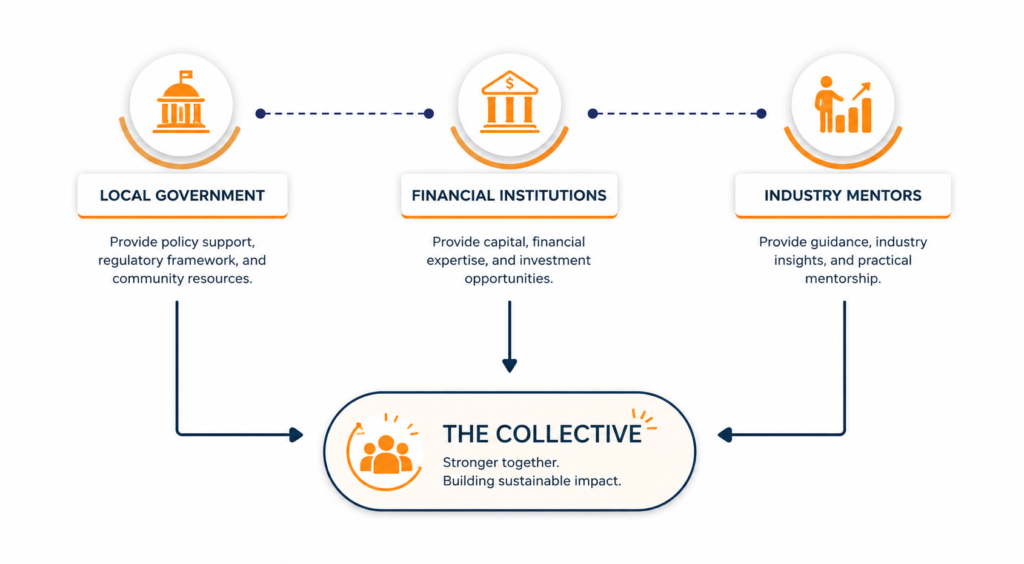
When these actors stop working in silos and start working in sync, the ground becomes fertile. We saw a glimpse of this in Vizag with the Visakhapatnam Town Fisherwomen’s Dry Fish Cooperative Society. They arrived not as isolated vendors, but as an emerging cooperative working together to crack a larger market. They are exactly the kind of collective the WEE + DEM model is built to find, formalize, and fast-track.
Designing a System that Works for Everyone
The women who showed up at the EntrepreNaari Utsavam with their ceramics, cookies, and dried fish weren’t looking for charity, and they weren’t asking just to be celebrated.
They were demonstrating what happens when a system is deliberately, structurally designed to let them win. By marrying the power of collectives with a dedicated district ecosystem, GAME with its partners in Vizag isn’t just supporting individual entrepreneurs—it’s building an environment where growth is inevitable.
This blog is contributed by Poornima Murthy, Vice President – Women’s Economic Empowerment, and Subhash Kiran Kasarapu, Head – Program Director, DEM Andhra Pradesh.